Is your exterminator bringing a steamer, and you aren’t sure what to do before they arrive? Good prep is what makes bed bug preparation for steam treatment actually work.
Steam is a contact method. It’s excellent at seams and tufts, but only where the nozzle can reach.
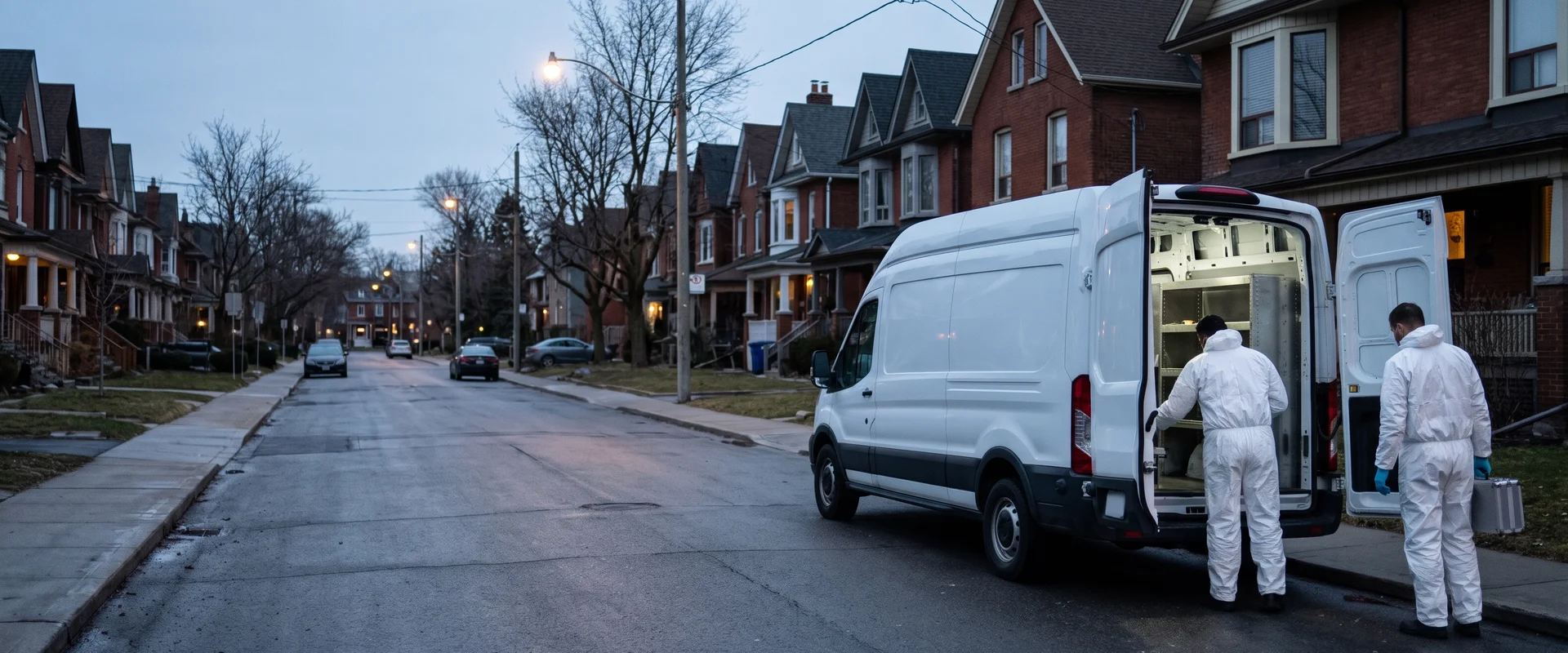
At Bed Bug Preparation Services Toronto, we get your fabrics and furniture ready for dry vapour steam. We make every fabric edge reachable and keep moisture away from anything it could damage.
Here’s how it works, what it costs, and where steam fits.
What Steam Prep Involves
Steam only kills what it touches. Research on steam and bed bugs, including a 2012 Pest Management Science study from Texas A&M, points to slow passes of the wand, around 20 seconds per linear foot. A technician can’t work that carefully on a seam buried under a cushion or a bed pushed against the wall.
So our crew clears the way first:
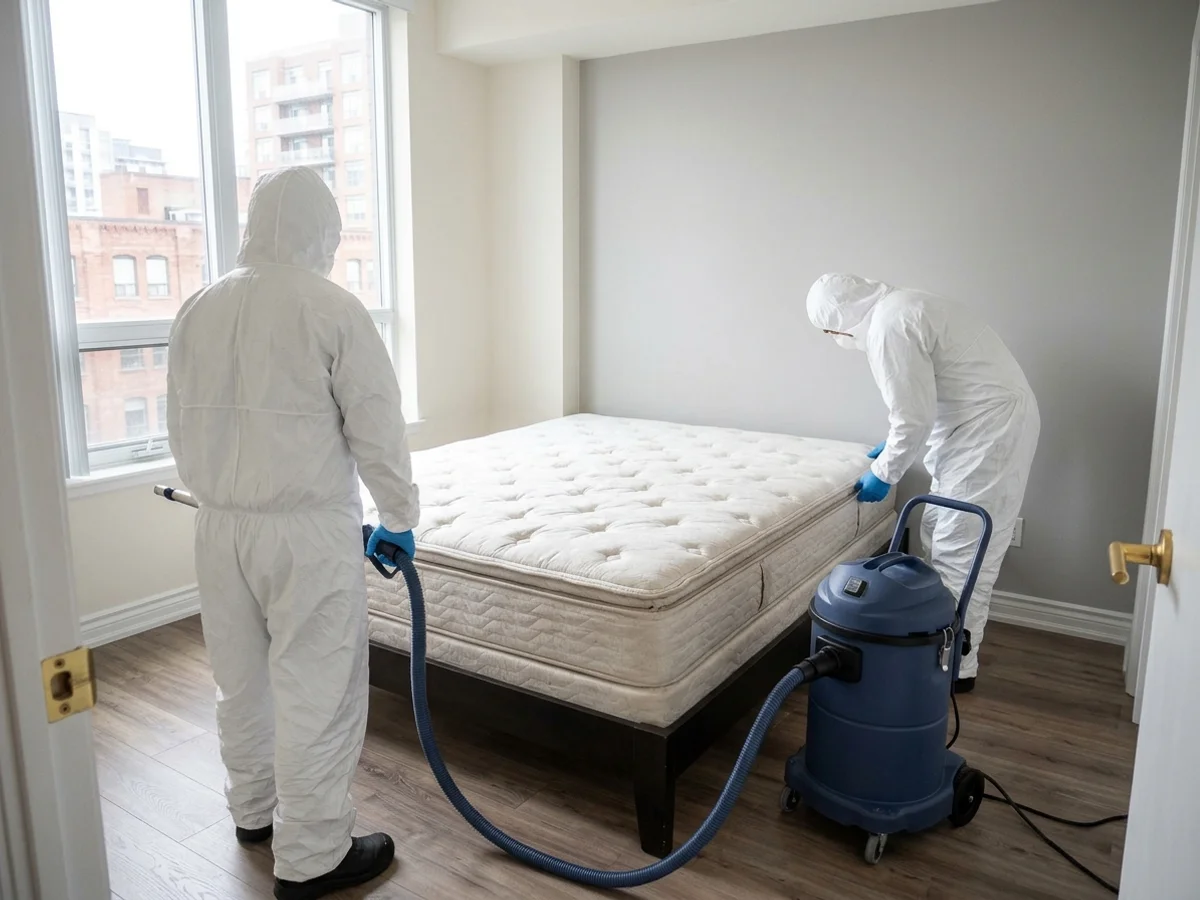
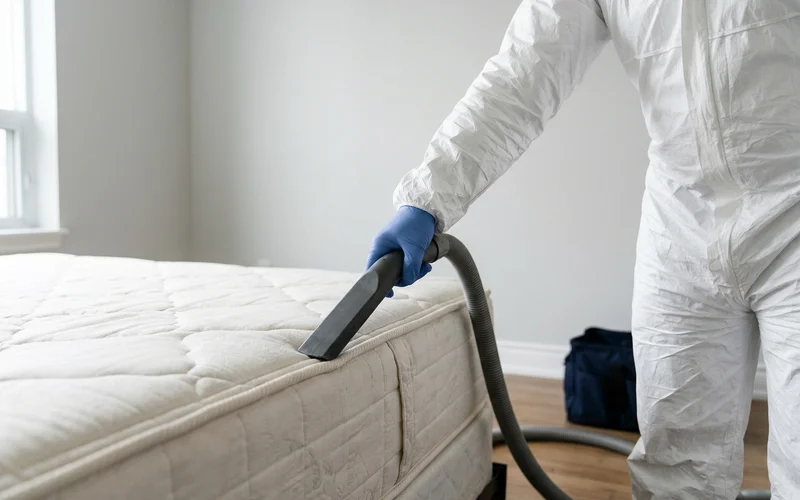
- HEPA pre-vacuum of mattresses, box springs, upholstery, edges and baseboards
- Cushions removed, sofa and headboards pulled from walls
- Box springs and mattress tufts fully exposed
- Books, papers, small electronics and other moisture-sensitive items removed or covered
- Bedding and loose textiles laundered at 60C+ and sealed
The vacuum step matters more than most people expect. High-pressure steam can blow bugs off a surface before they heat up, so a clean, exposed seam gives the steam a better chance to do its job.
Where Steam Stops
Steam isn’t a whole-room answer. University of Kentucky Entomology notes bugs hide in “carpet edges, cracks in moulding, outlets, picture frames, and clutter in closets.”
Steam handles fabric seams well. Another method your exterminator chooses usually covers the rest of the room.
Health Canada makes the same point about the physical side: “Whichever treatment is used, it only works if physical control and prevention are done along with it.”
Steam Prep Cost Guide
Pricing depends on unit size and how much clutter we need to work around. A heavily cluttered home takes longer to clear and sort, and the price reflects that.
| Unit | Price (CAD) |
|---|---|
| Studio / 1-bed | $1,500 - $2,000 |
| 2-3 bedroom | $2,000 - $3,000 |
| Heavy-clutter | $3,000 - $4,500 |
| Put-back | $400 - $1,500 |
Put-back is the work after treatment, when we return furniture, bedding and belongings to where they belong.
When Is Steam Used?
Exterminators reach for steam on mattresses, upholstered furniture and fabric-heavy rooms, often with spray or Aprehend. Rutgers researchers have found that steaming furniture from the bottom up helps, since bugs that fall away from the heat can end up with a sublethal dose.
If Aprehend is part of the plan, treated strips must not be steamed afterwards. We work around them so the product stays effective.
Steam is a good fit when:
- Your bed, couch or headboard has deep seams and tufts
- A room is heavy on fabric, like a bedroom or a lounge
- Your exterminator wants a chemical-light option on soft surfaces
Steam vs Heat Prep
Steam and whole-unit heat ask different things of you. Steam is seam by seam, so we expose fabric and pull out anything that hates moisture. Heat covers the whole room, so we focus on heat-sensitive items and airflow.
| Steam | Whole-unit heat | |
|---|---|---|
| Coverage | Contact, seam by seam | Whole room |
| Main prep | Expose seams, remove moisture-sensitive items | Remove heat-sensitive items, open airflow |
| Laundry | Bedding and loose textiles | Often lighter |
After clearance, we restore the unit. We can also apply electrostatic Vital Oxide (DIN 02422654) disinfection on untreated surfaces.
Ready to get your home or business set up for steam? Call +1-647-905-7199 and we’ll book your steam prep.