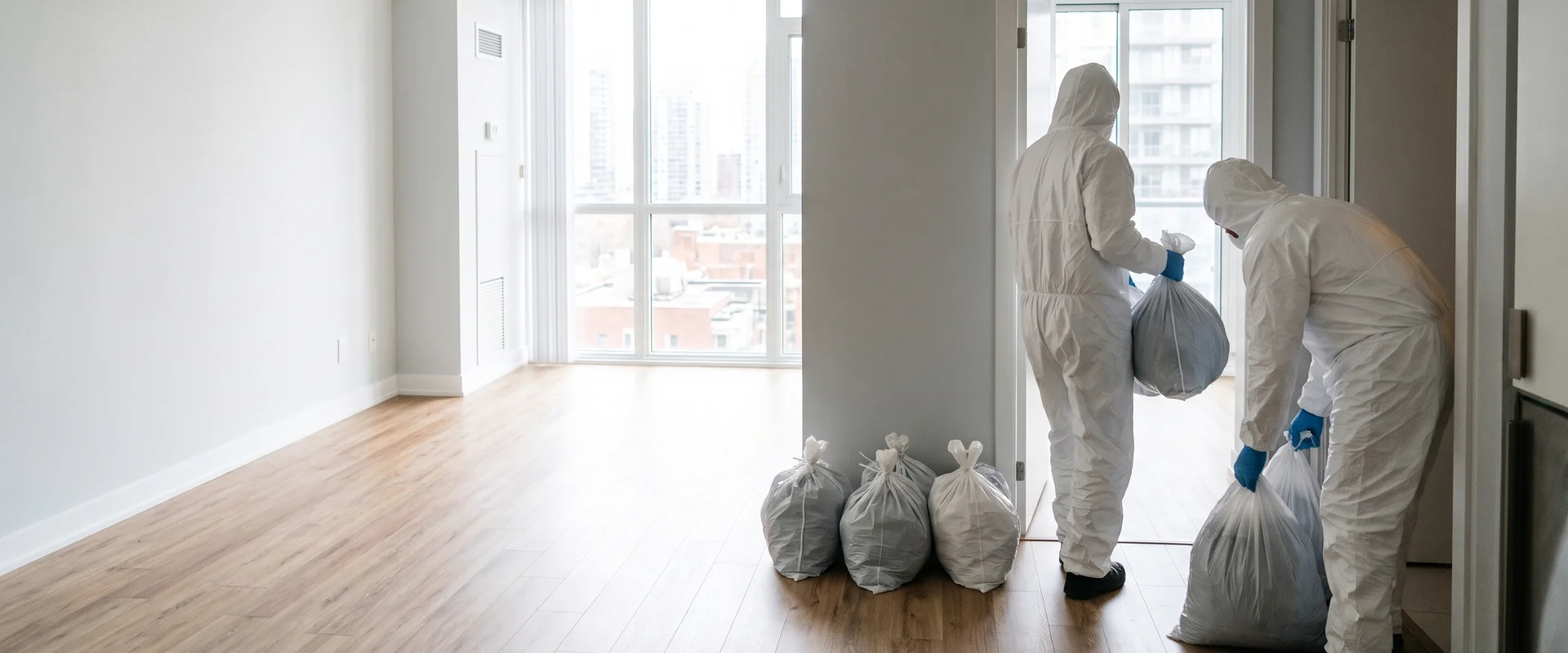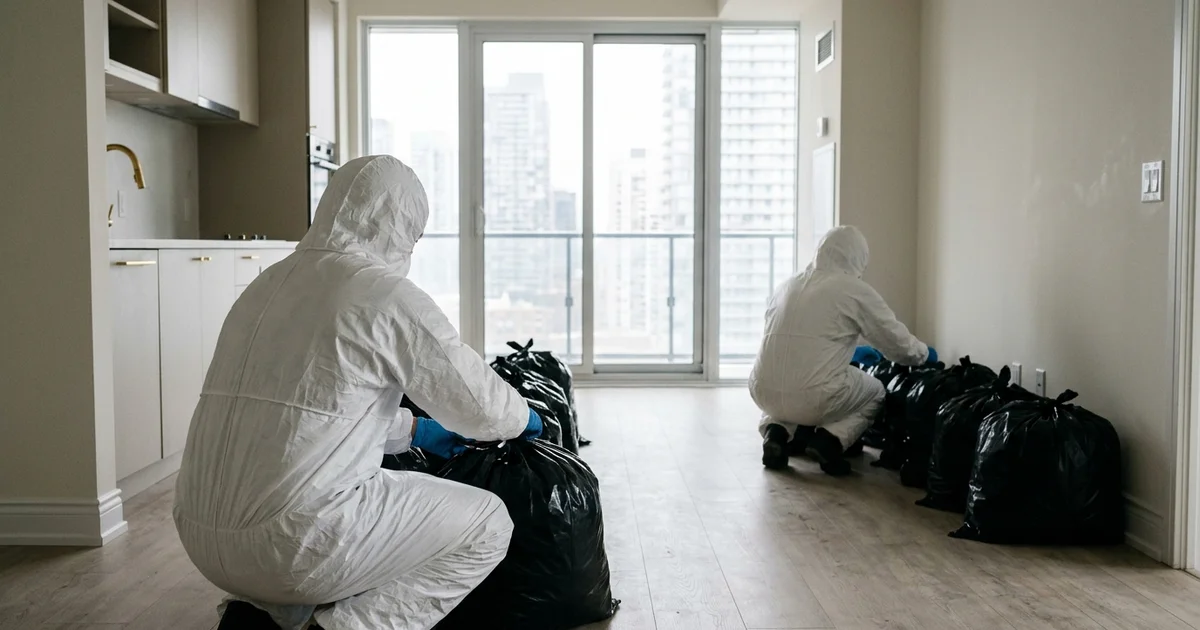
What Bed Bug Preparation Means
Bed bug preparation is the physical work that makes a treatment possible. It’s the list of tasks on your exterminator’s prep sheet, the ones you finish before they arrive.
For Toronto homes and businesses, bed bug prep usually means:
- Bagging and laundering textiles
- Emptying closets and dressers
- Pulling furniture away from walls
- Encasing mattresses
Our crews do this work for residents across the city. You can see how we handle it on the Bed Bug Preparation Services Toronto homepage.
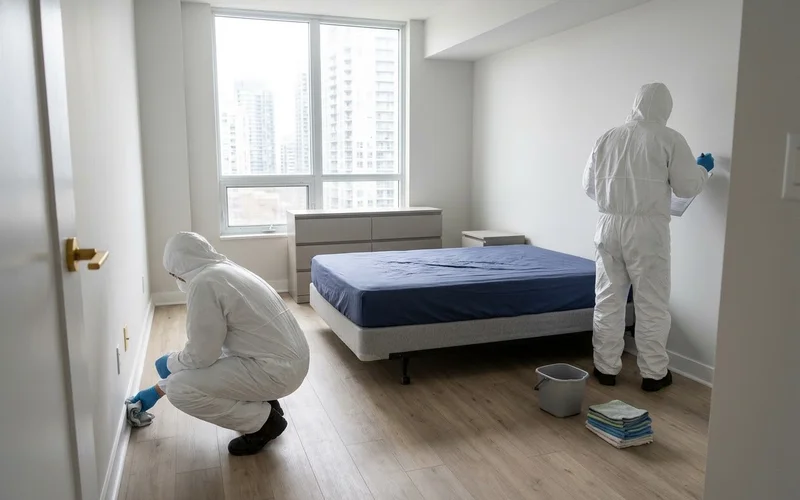
Prep is not the treatment. Your licensed exterminator chooses the method, whether that’s chemical spray, heat, Aprehend, steam, cryogenic CO2 or fumigation, and applies it. Prep is everything that has to happen first so the method can reach the bugs.
Health Canada says the pest control operator “will usually give you specific instructions to prepare for an inspection or treatment.” Treat that sheet as the rule book. Our job is the labour.
Key point: Health Canada says “whichever treatment is used, it only works if physical control and prevention are done along with it.” Prep is that physical control.
Why Your Exterminator Requires It
Your exterminator requires prep because bed bugs hide in places a treatment can’t reach until you clear them. University of Kentucky Entomology notes that they “hide in carpet edges, cracks in moulding, outlets, picture frames, and clutter in closets.” A spray cannot reach a bug inside a packed drawer. Heat struggles to get through a dense pile of clothes.
A technician also can’t treat the baseboard behind a bed that’s pushed against the wall.
Health Canada also warns that “bed bugs move easily from room to room on infested objects.” That’s why prep is about sealing as much as clearing. Items leave drawers and go straight into sealed bags, so bugs don’t get carried into the hallway or a clean room.
Health Canada recommends storing clean, dry items in light-coloured, heavy-duty sealed plastic bags or lidded plastic bins. The light colour makes a stray bug easier to spot.
When prep is incomplete, a few things tend to happen:
- The technician treats what they can reach and notes what they couldn’t
- Surviving bugs repopulate the cleared areas within weeks
- A follow-up visit is needed, often at extra cost
- The household goes through the stress a second time
What Prep Usually Includes
Most prep sheets cover six jobs: laundry, closets, wall clearance, the mattress, kitchen and bathroom items, and clutter. Every sheet is different, so always follow yours first. Here’s what the common tasks involve:
| Task | What it involves |
|---|---|
| Laundry | Wash textiles at 60C+, dry on high heat, store in clean sealed bags |
| Closets and dressers | Empty contents, launder or seal, remove cardboard |
| Wall clearance | Pull beds, dressers and sofas about 2m from walls |
| Mattress and box spring | Strip, vacuum seams, encase after treatment |
| Kitchen and bathroom | Seal food, dishes and toiletries if the sheet asks |
| Clutter | Clear floors and surfaces so baseboards and outlets are reachable |
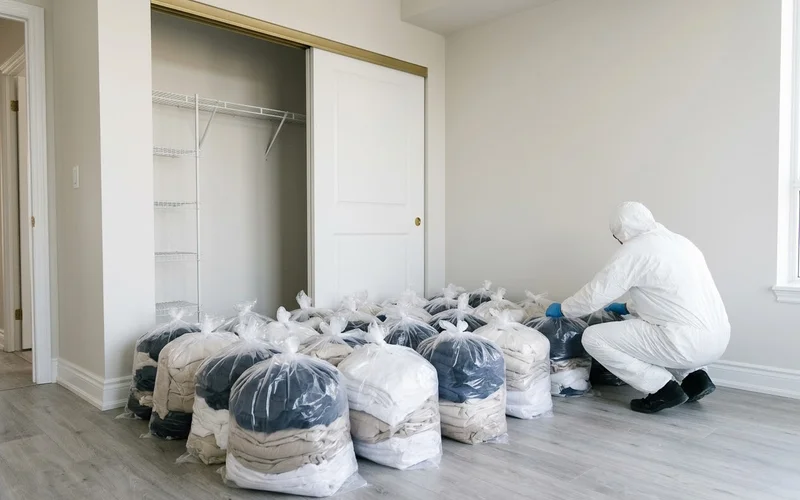
Health Canada’s guidance is to wash bedding, curtains and clothes in hot water and dry them on the hottest dryer setting. Ontario public health pre-treatment checklists commonly ask for at least 30 minutes of dryer time on high.
Here’s a tip that saves a lot of effort. Heat from the dryer does the real work, so items that can’t go in the washer can often go straight into the dryer on high.
Our free bed bug preparation checklist PDF breaks these into room-by-room steps you can print.
Who Should Do the Prep
You can do the prep yourself if you live in a small, tidy unit with an in-suite washer and dryer and a couple of free days. Otherwise, hiring a crew is usually the safer and cheaper choice. Hiring is the better call if any of the following are true:
- The treatment date is 24-72 hours away and you work or care for family
- There’s no dryer in your unit, so 60C+ laundry means days at a laundromat
- The unit is cluttered and sorting feels overwhelming
- The resident is a senior, disabled or recovering from illness
- A previous treatment failed and the exterminator is asking for stricter prep
DIY prep most often fails at the same three places:
- Missed closets
- Laundry that wasn’t hot enough, or was mixed back in with untreated items
- Furniture left against walls
Property owners and managers have a stake here too. Toronto’s Property Standards By-law covers bed bugs under insects, and landlords are responsible for pest management. Tenants are expected to prepare the unit following the instructions they’re given, so a unit that isn’t ready can hold up treatment for the whole building.
How to Get It Done in Toronto
Getting help with bed bug preparation in Toronto takes one call or request, and the whole process looks like this:
- You call or send a request, and we book a free assessment within 24 hours, in person or from photos.
- You get a fixed written CAD quote.
- We call your exterminator’s lead technician for the prep sheet.
- Our crew does the work, usually in one day for a studio or 1-bed.
- On treatment morning, we hand over in writing.
Published rates start at $1,500 for a studio or 1-bed and run to $4,500 for heavy-clutter units.
The City of Toronto has a reassuring message for anyone feeling embarrassed: “Anyone can get bed bugs regardless of income or housing, so there is nothing to be embarrassed about.” Bed bug preparation is a practical job, and getting help with it is a practical decision.
If the list in front of you feels like too much, send us your prep sheet. Our crews can take it on, quietly and without judgment.