Laundry Is the Biggest Job on the Sheet
Bed bug preparation for clothes and laundry takes more hours than every other prep task combined. Every piece of clothing, bedding, towel and curtain in affected rooms needs to be washed or heat dried, then stored sealed.
Done right, this removes a huge number of hiding places. Done wrong, it carries bugs straight back in.
That’s why our bed bug cleaning service in Toronto includes laundry pickup. Below, we cover the heat rules, bagging, an item-by-item guide and when to hand the job off.
The 60C Rule
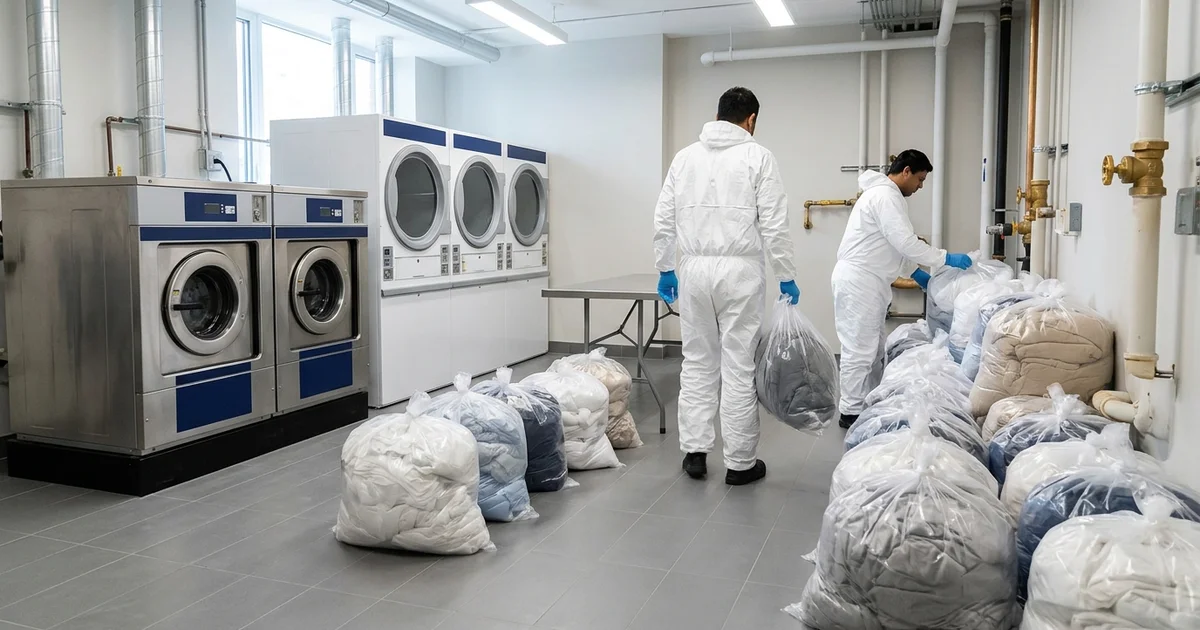
Wash at 60C or higher, then dry on high heat for at least 30 minutes. Heat kills bed bugs and eggs, so these three rules do most of the work:
- Wash at 60C or higher where labels allow
- Dry on high heat, at least 30 minutes after the load is dry
- The dryer matters most; a hot dryer cycle alone treats many items that cannot be washed hot
A 2010 study in the Journal of Economic Entomology tested practical ways to treat infested laundry. It found that a 30-minute wash at 60C (140°F) killed every bed bug life stage, eggs included. Cooler washes tend to kill adults and nymphs, but eggs can survive them.
Ontario health units, including Durham Region Health, give the same dryer advice: high heat for a minimum of 30 minutes. Keep the dryer loosely filled so the hot air can reach every item.
How to Bag and Move Laundry
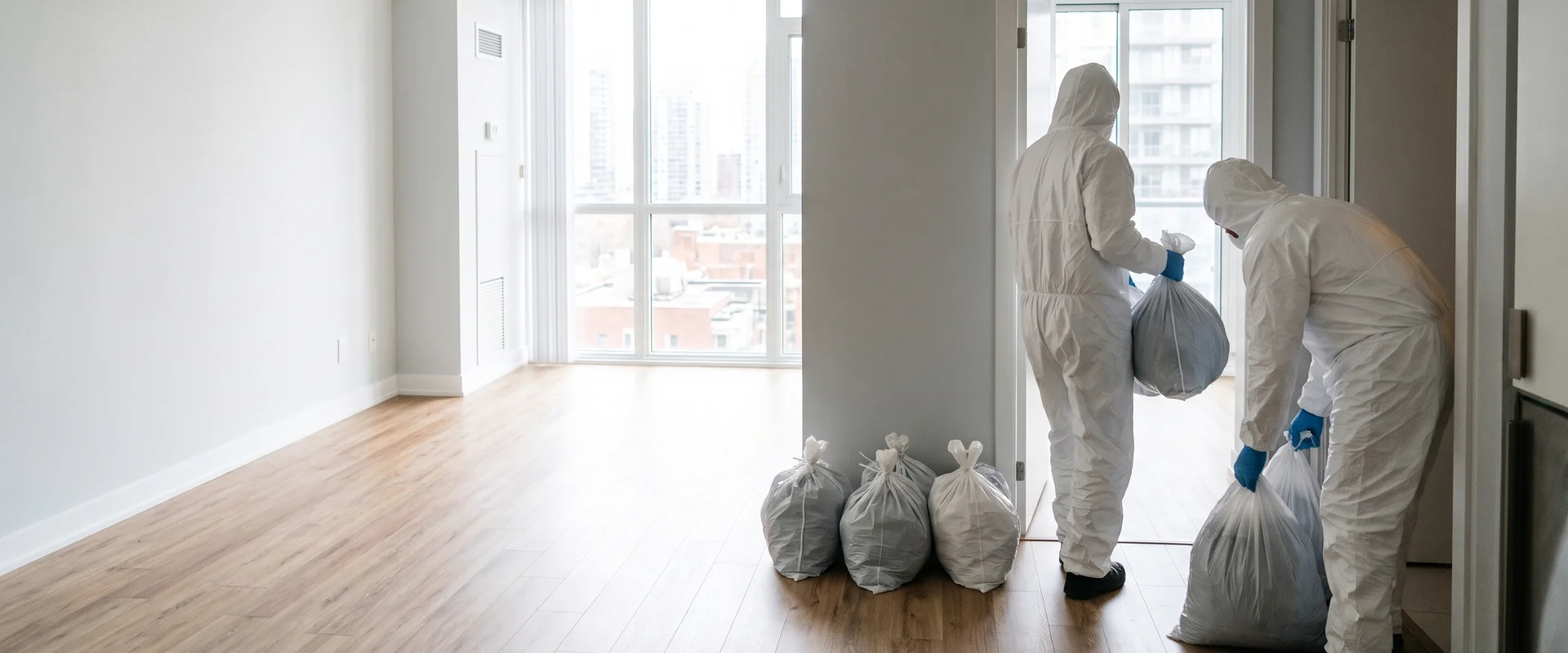
Seal every bag in the room where the items are, before you carry anything. Health Canada notes that “bed bugs move easily from room to room on infested objects.” Laundry is the most common way that happens during prep.
- Bag items in the room where they are, and seal the bag before moving it
- Carry sealed bags straight to the machine
- Empty the bag into the washer and throw the bag away sealed
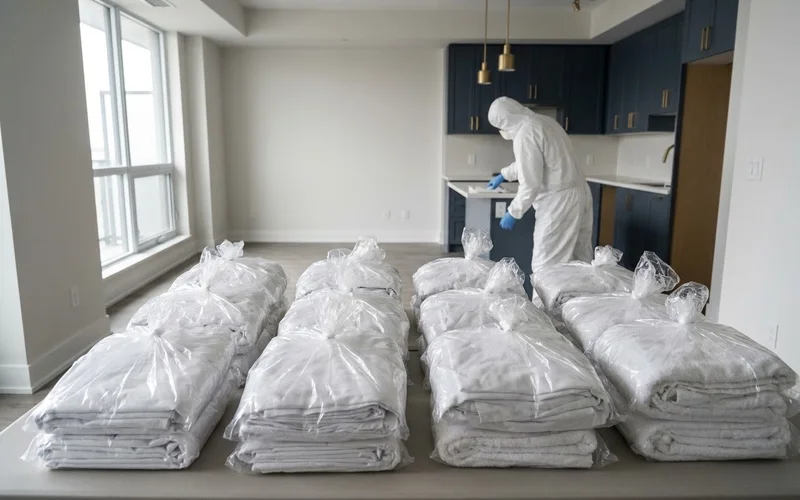
- After drying, put items into a new clean bag and seal it
- Store clean bags in a clean zone, away from untreated bags
Sheets, pillowcases and duvets follow the same steps, but the mattress itself needs an encasement. Our guide to preparing your mattress and bedding for bed bug treatment covers both.
Keep Clean and Dirty Bags Apart
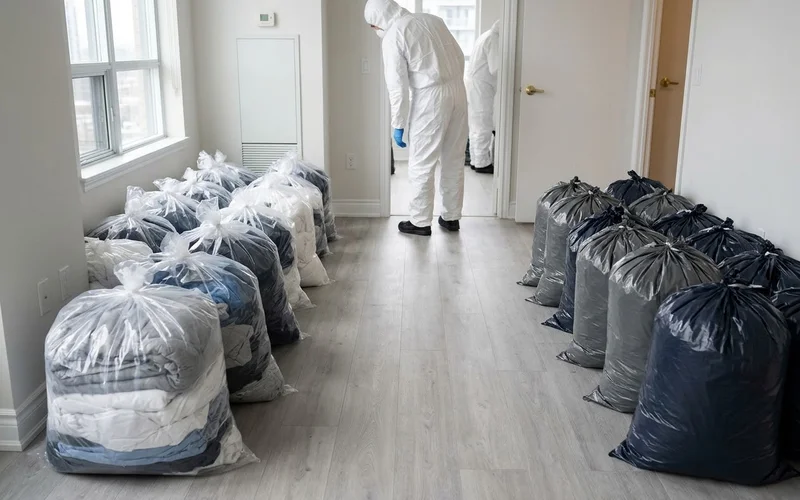
Use clear bags for clean items and opaque or labelled bags for untreated ones, so you can tell them apart at a glance. The single most common mistake is putting clean laundry back into the bag it came out of, or next to untreated bags.
A marker and a strip of tape on each untreated bag costs almost nothing. It saves you from re-washing a whole load.
Item-by-Item Guide
Most items follow the same wash-hot, dry-hot, seal routine, and the exceptions are mainly delicates and dry-clean-only pieces. Here’s how each category works.
| Item | What to do |
|---|---|
| Everyday clothing | 60C+ wash, high-heat dry, sealed |
| Bedding and pillows | 60C+ wash where possible, high-heat dry |
| Towels and bath mats | 60C+ wash, high-heat dry |
| Curtains | Wash or high-heat dry per label, rehang after treatment |
| Delicates and wool | High-heat dry if label allows, otherwise seal and ask the exterminator |
| Dry-clean only | Seal and tell the cleaner, or high-heat dry if allowed |
| Shoes | Seal; many tolerate a dryer cycle |
| Stuffed toys | High-heat dry, sealed |
Dry cleaning is a legitimate option for items that can’t take a hot wash. Health authorities such as Durham Region Health list it alongside hot washing for bedding. Always tell the cleaner the items are bed bug prep, and keep them sealed until they go in.
No Dryer in Your Unit?
If you have no dryer, the fastest fix is to hand the laundry to a service that washes hot and dries hot for you. Many Toronto apartments have only a shared laundry room, and some have none.
Running dozens of loads through coin machines or a laundromat can take days and spreads risk to shared spaces. Our laundry pickup collects sealed bags, washes at 60C+, dries hot and returns everything sealed. You don’t have to carry bags through the building.
How Much Laundry Is Normal?
Most units produce between 8 and 30 loads, and a full family home can run higher. Use this as a quick planning guide.
| Unit | Typical loads |
|---|---|
| Studio / 1-bed | 8-15 |
| 2-3 bedroom | 15-30 |
| Family home, full closets | 30+ |
After Treatment
Keep clean items sealed until your exterminator clears the unit. Then unpack in stages, starting with bedding.
Our guide on closets and storage explains how to refill closets without bringing anything untreated back in.
When to Hand It Off
Hand the laundry off if the count is in the dozens, you have no dryer, or the treatment is within 72 hours. In those cases, laundry pickup is usually the best value part of any prep. It’s included in our published tiers, from $1,500 for a studio or 1-bed.
University of Kentucky Entomology notes bugs hide in “clutter in closets,” and laundry is how that clutter gets treated. A proper bed bug laundry 60C wash plus a hot dry is the step that makes the rest of your prep count.
Ready to skip the hauling? Contact our team to book laundry pickup, and we’ll handle the washing, drying and sealing for you.