
Encase or Replace?
Encase the mattress you have in most cases. Replace it only when your exterminator tells you to. Most people expect to throw it out, but that’s rarely needed.
Here’s how the two options compare, so you can decide with your exterminator. Our bed bug cleaning service in Toronto covers both encasement and disposal. If you’re sorting out bed bug preparation for your mattress and bedding, this is the first call to make.
Encasement vs Replacement
Encasing costs less and carries less risk, so it wins for most households. Replacing only makes sense once the unit is cleared.
| Encase | Replace | |
|---|---|---|
| Cost | Encasement cost only | New mattress, plus disposal |
| Effectiveness | Traps any remaining bugs; easy to inspect | New mattress can be re-infested if treatment is not complete |
| Timing | Right after treatment | Only after the unit is cleared |
| When it makes sense | Most cases | Damaged mattress, heavy activity, exterminator advice |
Replacing a mattress before the unit is cleared often means the new one gets infested too. Health Canada notes that “bed bugs move easily from room to room on infested objects,” and a fresh mattress is just another object.
How Encasements Work
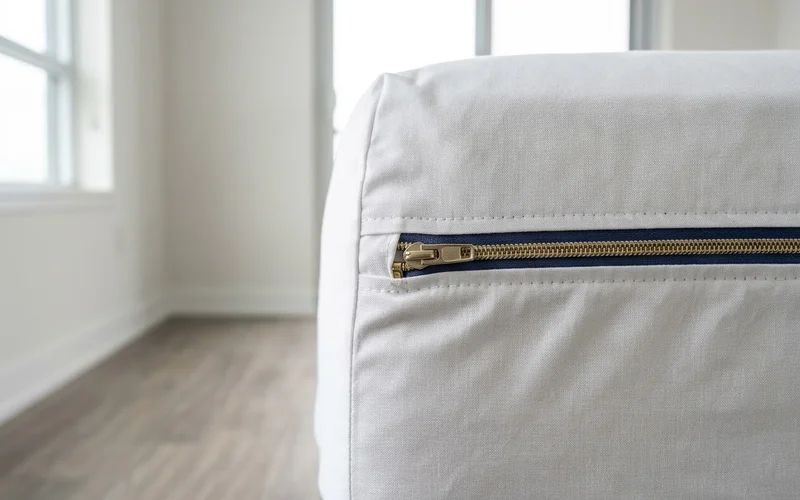
A certified bed bug encasement seals the mattress so nothing gets in or out. It’s a zippered cover with a fine weave and a sealed zipper end. Bugs inside can’t get out to feed and eventually die. Bugs outside can’t get in, and the smooth surface makes any activity easy to spot.
The one-year rule has a reason behind it. Extension entomology guides from U.S. universities report that trapped bed bugs can survive roughly 20 to 400 days without a meal, depending on temperature. In a heated home, 1 to 4 months is more typical. A full year gives you a safe margin.
- Choose a certified bed bug encasement, not a standard mattress protector
- Encase both the mattress and box spring
- Close the zipper fully and secure the end stop
- Leave it on for at least a year
- Check for tears regularly; repair or replace if damaged
The bed frame still needs its own prep: stripped, pulled 2m from the wall and joints exposed. Our guide to preparing furniture for bed bug treatment walks through each piece.
Keep in mind that an encasement only handles the mattress. Bed bugs will find another hiding spot if the rest of the room isn’t treated, so it works best alongside professional treatment.
When Disposal Is Needed
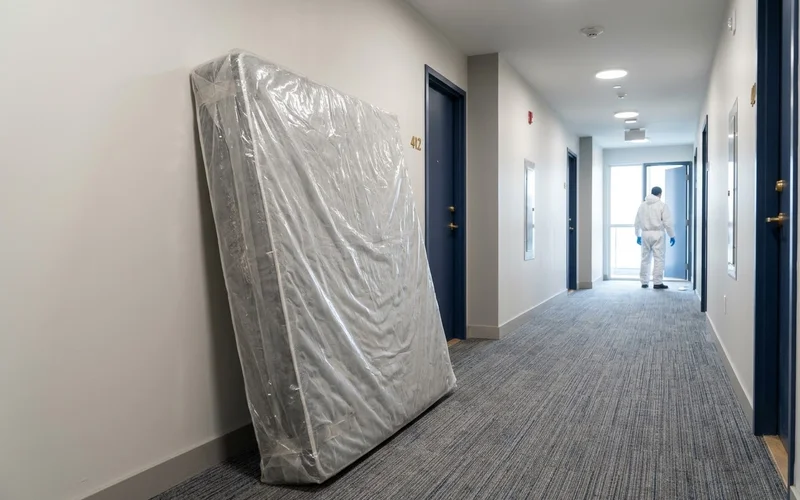
Dispose of a mattress only if your exterminator advises it. That usually means it’s torn, very old, heavily affected or can’t be encased. If so, the City of Toronto’s guidance is to wrap the item completely in plastic before it leaves the unit, so bugs can’t escape in the hallway.
- Wrap it in heavy plastic inside the unit
- Seal the plastic with tape
- Deface it, for example by cutting the fabric and marking it, so nobody takes it from the curb
- Move it through the building with a booked elevator
- Follow City of Toronto curbside or building disposal rules
Timing matters too. Put the mattress out shortly before collection, not days ahead. The longer it sits, the more likely someone hauls it home.
Bedding Prep
Strip every bed and bag the linens before treatment day. Hot wash, high-heat dry, then sealed storage is the routine. Canadian public health guidance calls for a hot wash followed by at least 30 minutes in the dryer on high heat.
- Strip all bedding: sheets, pillowcases, duvet, mattress pad, bed skirt
- Wash at 60C+ where labels allow and dry on high heat
- Pillows and duvets usually go in the dryer on high heat
- Store everything in new sealed bags until treatment is done
- After treatment, put clean bedding over the encasement
One pro tip: dry first, wash second when items can’t take heat in the wash. Dryer heat does the real work, so a delicate item can often skip the hot cycle and go straight in. Always check the care label.
Our bedroom prep guide covers the frame, headboard and dressers.
Box Springs, Frames and Headboards
Box springs should be encased, and frames need their joints exposed for treatment. University of Kentucky Entomology notes bugs hide in “cracks in moulding” and tight joints. Box springs and bed frames are full of them.
- Encase the box spring along with the mattress
- Pull the frame away from the wall so your exterminator can reach every joint
- Ask about upholstered headboards, which may need extra attention or removal on your exterminator’s advice
Cost Considerations
A certified encasement costs a fraction of a new mattress. Replacing a mattress and box spring adds the purchase price plus wrapped disposal. When disposal is needed, our quote lists it as a separate line so you can see exactly what it adds.
For landlords and business owners, the gap matters even more. Replacing beds across several units multiplies the cost, while encasements let you keep existing furniture in service.
The Bottom Line
For most Toronto households, the right answer is treat, then encase, then keep the encasement on. Replace only when your exterminator advises it, and only once the unit is cleared.
The City of Toronto says “anyone can get bed bugs regardless of income or housing, so there is nothing to be embarrassed about.” Keeping your mattress is usually the practical choice.
Not sure which way to go? Book a treatment with us, and we’ll tell you whether your mattress can be encased or needs to go.