Records That Show the Unit Was Ready
Bed bug preparation documentation is what turns “we prepped it” into something a landlord can show. The record should cover what was offered, what was done and when. That matters whether it goes to an insurer, a condo board, RentSafeTO or, in some cases, the Landlord and Tenant Board (LTB).
Toronto buildings have a particular reason to care. According to the City of Toronto’s RentSafeTO requirements, building owners must keep pest management records for two years. Tenants can ask to see them.
This guide lists the records we provide and why each one matters. It’s general information, not legal advice. See our landlords and tenants service for the full scope.
The Five Records
You get five records, and each one answers a different question: what was agreed, how the rooms looked, who signed off, what changed, and where it all lives.
| Record | What it shows | When you get it |
|---|---|---|
| Written scope | What was agreed, by room and task | Before work starts |
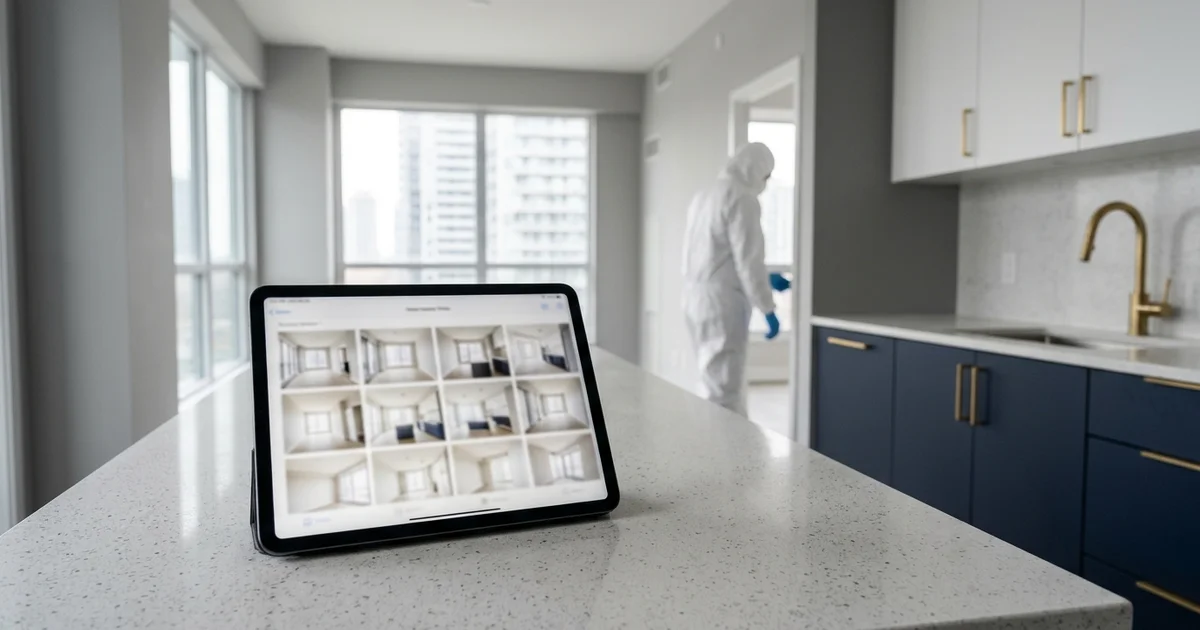
| Before-photos | Condition of rooms at the start | Prep day |
| Signed handoff | What was done, signed on treatment morning | Treatment morning |
| After-photos | Rooms after prep and after put-back | Prep day and put-back |
| PDF report | All of the above, plus notes on access | Within 24 hours |
Photos show rooms, furniture positions and cleared areas. They never show personal belongings or faces.
Written Scope
The written scope is the baseline for everything else. It lists each room, laundry, disposal and add-ons, with the CAD price.
Anything in the scope that wasn’t done will show up in the handoff. That gives a property manager a clear line between “offered” and “completed.”
Before and After Photos
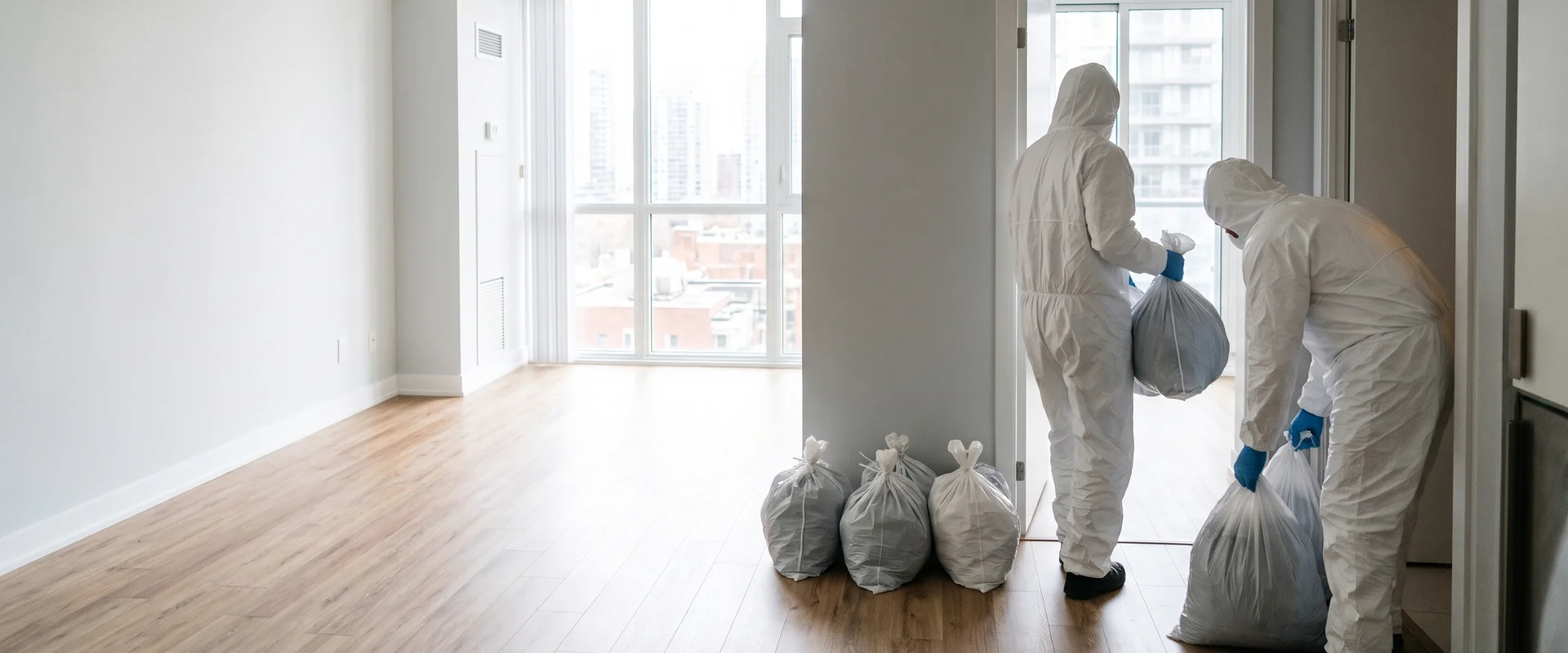
Before and after photos show that closets were emptied, furniture was pulled 2m from walls and beds were stripped. University of Kentucky Entomology notes bugs hide in “carpet edges, cracks in moulding, outlets, picture frames, and clutter in closets.” Photos of those areas cleared are often the most useful part of the record.
Here’s what we photograph on prep day:
- Closets and storage areas, emptied
- Bed frames and mattresses, stripped
- Furniture pulled away from walls
- Baseboards, outlets and floor edges, cleared for access
The Signed Handoff
The signed handoff is a checklist that proves the unit was ready when treatment began. On treatment morning, the technician receives it signed by our crew lead.
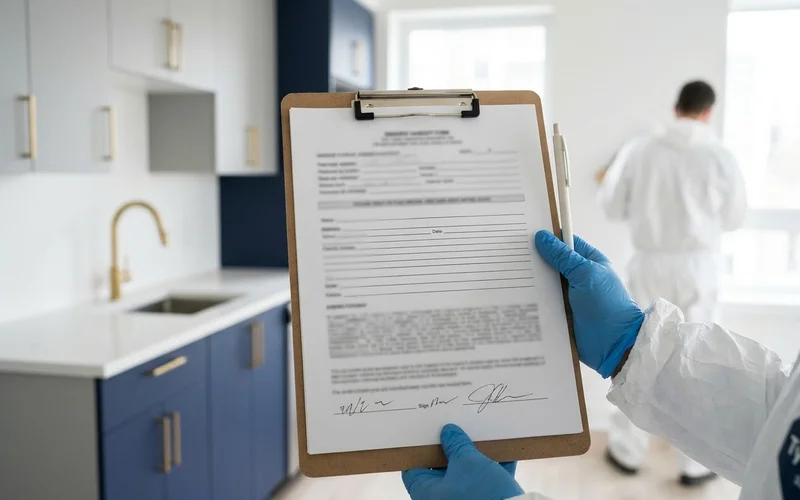
Shay signs multi-unit and heavy-clutter handoffs. If the technician notes anything, it goes on the record.
The PDF Report
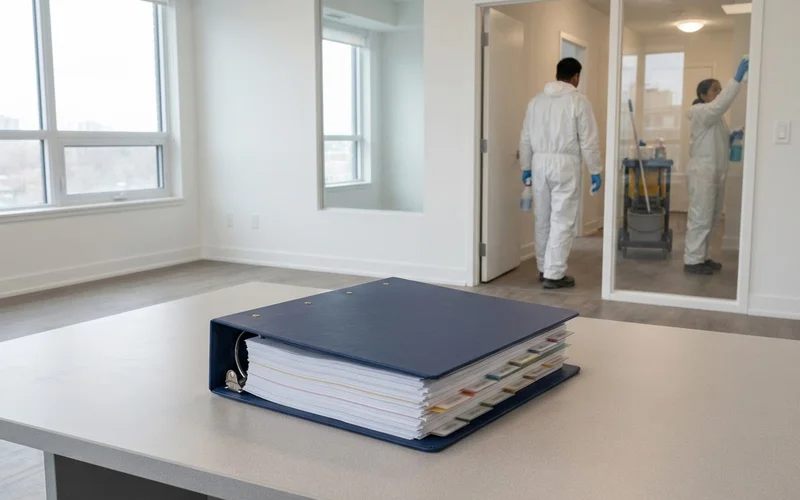
The PDF report puts everything in one file, and you receive it within 24 hours. It combines the scope, photos, handoff and any notes, such as a room that was locked or a tenant who declined part of the scope.
For buildings, a unit-by-unit status sheet is included. One file is easier to forward to an insurer or file under a unit number than five separate emails.
Multi-Unit Status Reports
For floor-by-floor jobs, we add a status sheet per floor. Each door is marked as one of four outcomes, with a short reason:
- Prepped
- Partially prepped
- Refused
- No access
Property managers often tell us the “refused” and “no access” lines are the ones they use most. Our multi-unit prep guide explains how those jobs are scheduled.
Why Records Matter
Records settle questions after the fact, usually when a treatment needs a follow-up. Health Canada notes that “whichever treatment is used, it only works if physical control and prevention are done along with it.” So a missing prep step is the first thing people look for.
Here’s what the records answer:
- A follow-up treatment is needed: they show whether prep was the issue.
- A tenant needed help: they show it was offered.
- An insurer asks: they show the work was done professionally.
- A tenant requests pest records in Toronto: you have documentation ready. The City lists fines of $400 for failing to keep records or provide them to tenants, and $600 for failing to eliminate pests.
Notices and the RTA
Notice of entry is the part of the Residential Tenancies Act (RTA) that most affects prep days. In Ontario, landlords must give at least 24 hours’ written notice before entering a unit for work. The notice must state the reason, the date and a time between 8 a.m. and 8 p.m. Entry without notice is allowed only in an emergency or with the tenant’s consent at the time.
Keep copies of notices with our records. Together they show the visit was properly arranged and the work was offered.
Formal steps at the Landlord and Tenant Board should only be taken with legal advice. A Form N5, for example, is a notice about interfering with others or damage. According to Tribunals Ontario, it is a voidable notice, which means the tenant gets a chance to correct the problem. That’s a legal judgment call, so talk to a paralegal or lawyer first.
Privacy
We keep records for warranty and insurance purposes. We share them only with the party who arranged the work. Belongings and faces never appear in them.
The City of Toronto says “anyone can get bed bugs regardless of income or housing, so there is nothing to be embarrassed about,” and our records are designed to respect that.
Want to see what a report looks like before you book? Ask us for a sample, and we’ll walk you through the five records for your building.