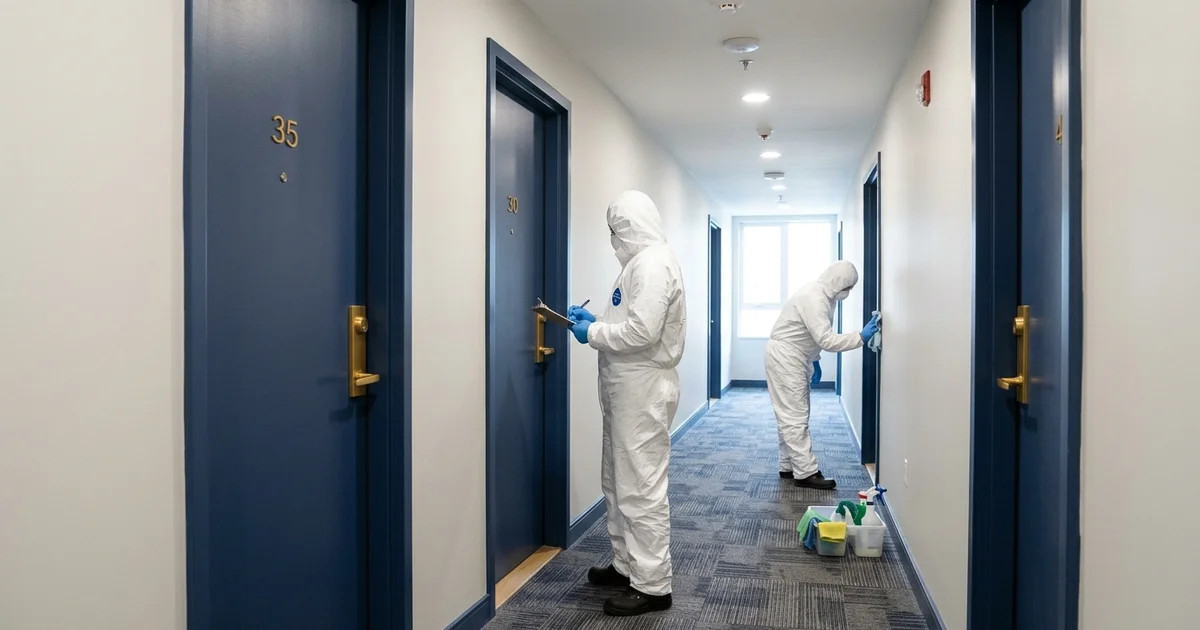
Refusal Is Usually About Ability
If a tenant refuses to prepare for bed bug treatment in Ontario, the cause is usually that they can’t do the work, not that they won’t. Many have no time, no dryer, no way to lift a mattress, too much clutter, or too much shame to let anyone see the unit.
That changes how you handle it. Fix the barrier first, and the “refusal” often disappears.
This guide covers the common reasons, the general legal context (including the N5 notice) and how professional prep usually solves the problem. Our landlords and tenants service handles these situations regularly.
Why Tenants Do Not Prep
Most tenants who won’t prep for bed bugs are stuck on one practical or emotional barrier, and each barrier has a fix. Match the fix to the barrier and you avoid a standoff.
| Reason | What helps |
|---|---|
| Works long hours or shifts | Professional crew on a day that suits them |
| No in-suite dryer | Laundry pickup with 60C+ wash |
| Elderly or disabled | No-lifting senior scope |
| Heavy clutter | Declutter and prep in one scope |
| Embarrassment | Discreet crew, plain invoice, no judgment |
| Language barrier | Plain-language instructions, patient explanation |
| Distrust of the landlord | Independent crew, written scope |
The City of Toronto’s message helps here: “Anyone can get bed bugs regardless of income or housing, so there is nothing to be embarrassed about.” Starting from that point lowers defenses.

Why It Matters to the Whole Building
One unprepared unit can put the whole building’s treatment at risk. Health Canada notes that “bed bugs move easily from room to room on infested objects.”
In a rental building, that can mean re-treating neighbours and paying for repeat visits. It’s why getting every door ready matters.
The General Legal Context
In Ontario, the landlord handles pest control, and the tenant is expected to cooperate. This is general information, not legal advice:
- Under the Residential Tenancies Act, landlords are generally responsible for maintenance, including pest control
- Landlords must give at least 24 hours’ written notice of entry, naming the date, a time window between 8 a.m. and 8 p.m., and the reason
- Tenants are generally expected to cooperate with reasonable pest control measures
- Where a tenant repeatedly prevents treatment, landlords may consider Landlord and Tenant Board (LTB) processes, such as a Form N5 notice
An N5 is not an instant eviction. Tribunals Ontario’s form gives the tenant 7 days to correct the problem, and if they do, the notice is void. If they don’t, the landlord can apply to the LTB starting on day 8.
Speak with a lawyer or licensed paralegal before taking formal steps. Hearings tend to look at what was offered, what was reasonable and what was documented.
Professional Prep as the Fix
Offering professional prep is often the quickest way to a treated unit. A landlord can book and pay, a tenant can book and pay, or the cost can be shared by agreement.
Here is how our crew works:
- Explains the plan to the tenant in plain language
- Works at the tenant’s pace, with no lifting for seniors or disabled tenants
- Keeps everything discreet: unmarked van, PPE inside the door, opaque bags
- Records what was done
Documentation
A record of what was offered and completed is the most valuable thing a landlord can bring to a dispute. We provide before and after room photos, the written scope, a signed handoff from treatment morning and a PDF report within 24 hours.
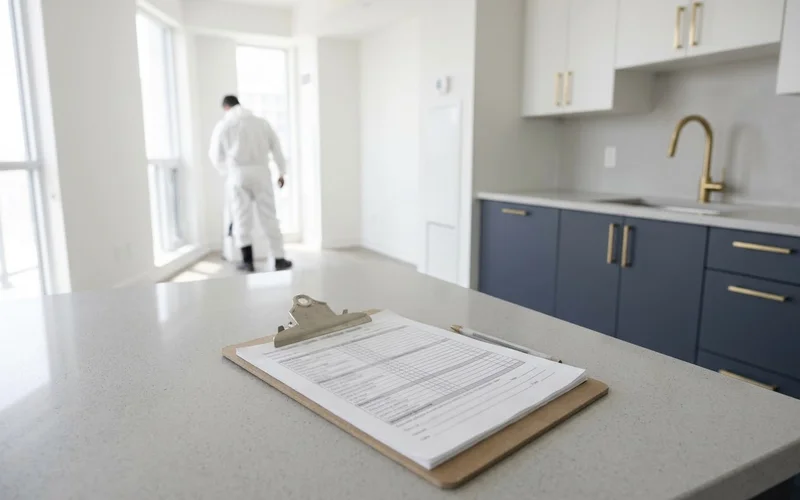
Where access was refused or partial, the report says so. Our guide to prep documentation landlords need for the LTB explains each record.
A Practical Sequence for Landlords
Follow these five steps in order, and keep proof of each one:
- Send the treatment notice and prep sheet with proper notice of entry
- Offer professional prep help, in writing
- Talk to the tenant, ideally in person, and listen for the real barrier
- Book a crew suited to that barrier
- Document each step
Only if the tenant still blocks access after all five is a formal route like the N5 worth discussing with a paralegal.
For Tenants
If you’ve received a notice and can’t do the prep, tell your landlord early and ask about help. Early notice shows good faith, and it keeps a prep problem from turning into a formal notice.
You can also book us directly. Our published rates start at $1,500 for a studio or 1-bed, and the written quote works for whoever pays. Contact us through our landlords and tenants service to get a quote and a prep date that fits your schedule.