Bed bug heat treatment vs chemical spray is a call your exterminator makes, but the prep is very different. Heat prep is mostly about loosening things up and removing heat-sensitive items. Spray prep is mostly about emptying and sealing.
We get asked about this often, so here’s the side-by-side. Our heat treatment prep and spray treatment prep pages cover each method in depth.
How Each Method Works
Heat raises the unit and its contents to roughly 135-140F, and spray puts residual product in the cracks where bugs hide. Each one needs different prep.
- Heat: The air reaches the thermal death point for bugs and eggs. A University of Minnesota study published in 2011 put the lethal temperature at about 48C for adults and about 55C for eggs. Heat reaches into fabrics and many packed spaces, but only if air can circulate.
- Spray: A licensed technician applies residual products to cracks, crevices, seams and baseboards. Spray doesn’t soak through packed drawers or piles of clothes.
Health Canada’s principle applies to both: “Whichever treatment is used, it only works if physical control and prevention are done along with it.”
Prep Side by Side
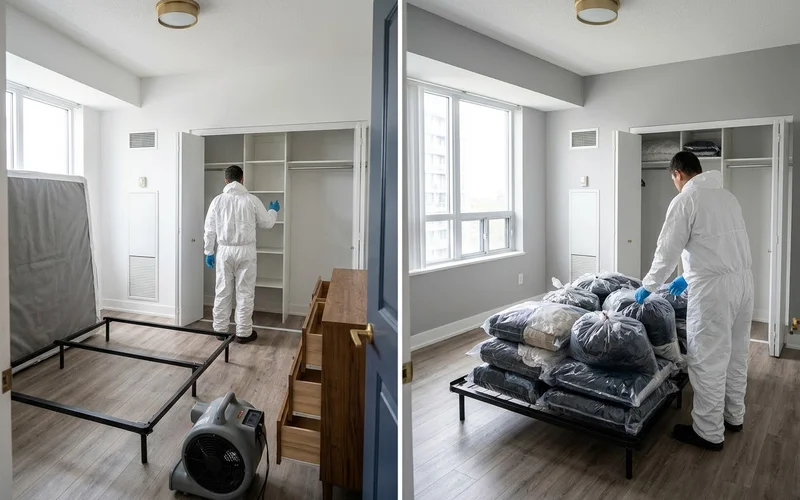
Heat prep is lighter on laundry but stricter on what you remove. Spray prep asks you to empty and wash more.
| Task | Heat | Spray |
|---|---|---|
| Laundry | Lighter, often bedding and floor piles | Full, all textiles in treated rooms |
| Closets and dressers | Opened and loosened | Emptied |
| Heat-sensitive items | Removed (aerosols, candles, medications, some electronics) | Usually stay |
| Furniture | Off walls for airflow | 2m from walls for access |
| Kitchen and bathroom | Remove heat-sensitive items | Seal food, dishes, toiletries |
| Mattresses | Stood up | Stripped, ready for encasement |
| Re-entry | After cooling, per exterminator | After product dries, per exterminator |
Bagging and Laundry Differences
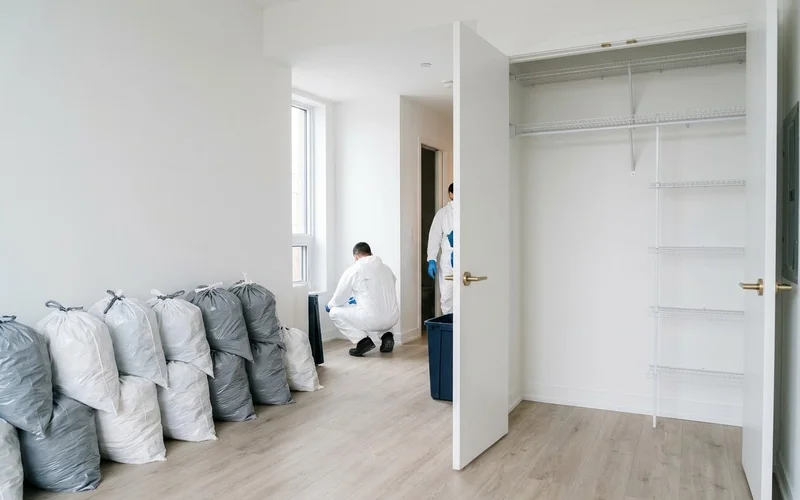
Spray prep means more laundry, and heat prep means less. For spray, every textile in treated rooms usually gets laundered at 60C+ and sealed.
For heat, the heat itself treats many fabrics in place, though devices and batteries need their own plan; see preparing electronics and appliances for bed bug treatment. Either way, keep clean and untreated items apart. Health Canada notes that “bed bugs move easily from room to room on infested objects.”
A tip from our crews: once clothes come out of the dryer, bag them right away. A clean sweater set on an untreated chair is a common way to restart the problem.
Item Removal Differences
Heat prep asks you to remove more. Anything that can melt, burst or degrade has to leave the unit, and spray prep is more about sealing than removing.
- Aerosols and candles
- Crayons and vinyl records
- Some medications and cosmetics
- Plants and pets
Since heat treatments commonly run about 6 to 8 hours (Orkin Canada’s figure for typical jobs), this list is worth checking the night before, not the morning of.
Re-Entry and Disruption
Heat usually means one long day away. Spray means a shorter absence, but more visits.
- Heat: You’re out for most of the treatment day, then back once the unit cools.
- Spray: You’re out for the drying time set by your exterminator, often several hours. There may be a second visit about two weeks later.
Michigan State University Extension notes that you may still see live bed bugs for up to two weeks after a spray service. That’s normal, so don’t panic or start spraying store-bought products on your own.
Which Is Better?
Neither is better in every case. Exterminators weigh activity level, unit type, clutter, residents’ health and building rules.
Heat is often chosen for heavy upholstery or when chemicals are a concern. Spray is common, flexible and often paired with follow-up visits. Some plans combine both.
If you want the lighter prep, the table above answers the question of which bed bug treatment needs less prep. Heat wins on laundry. Spray wins on item removal.
Cost
Our prep pricing is the same published tiers for either method. The scope reflects the sheet.
- Studio or 1-bed: $1,500-$2,000
- 2-3 bedroom: $2,000-$3,000
- Heavy-clutter: $3,000-$4,500 CAD
What Stays the Same
Whether you choose heat or spray, the hiding spots need to be cleared and reachable. University of Kentucky Entomology notes bugs hide in “carpet edges, cracks in moulding, outlets, picture frames, and clutter in closets.”
That part of prep never changes. Once you know which method you’re getting, pull up the matching prep page above and work through it room by room. If you’re not sure where to start, call us and we’ll walk you through your own heat treatment vs spray bed bug preparation plan.